The Future of Business AI: Tools to Systems
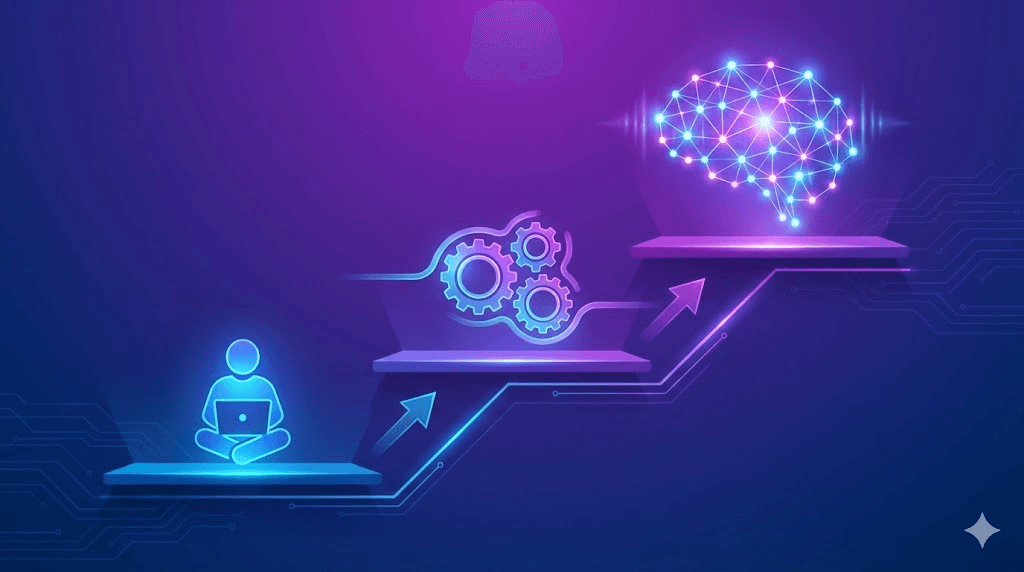
How the shift from point solutions to integrated AI infrastructure changes competitive advantage.
The first wave of AI adoption was about efficiency.
People discovered ChatGPT and learned they could write emails faster. Designers found Midjourney and could create assets in seconds.
But a faster email doesn't transform a business. It just saves a few minutes for one person.
The next wave of AI isn't about tools. It's about systems.
The Shift from Task to Workflow
Today, most AI use cases look like this:
Human: "Write me an email about X."
AI: "Here is the email."
Human: (Edits email, sends it manually)
This is helpful, but it's not scalable. The human is still the bottleneck.
Tomorrow's AI systems will look like this:
System Trigger: New Lead fills out form.
In this model, the AI isn't just a tool you pick up. It's a coworker that handles entire workflows autonomusly.
Competitive Advantage is Architectural
As AI models become commodities (everyone has access to GPT-4), the advantage won't come from the model itself.
It will come from how you wire the models together.
The companies that win will be the ones that build the best data plumbing, the best agent orchestration, and the most reliable feedback loops. They won't just "use AI"—they will be built on AI systems.
"The future belongs to the architects, not the prompt engineers."